Engineering our
mountain communities

Water resources
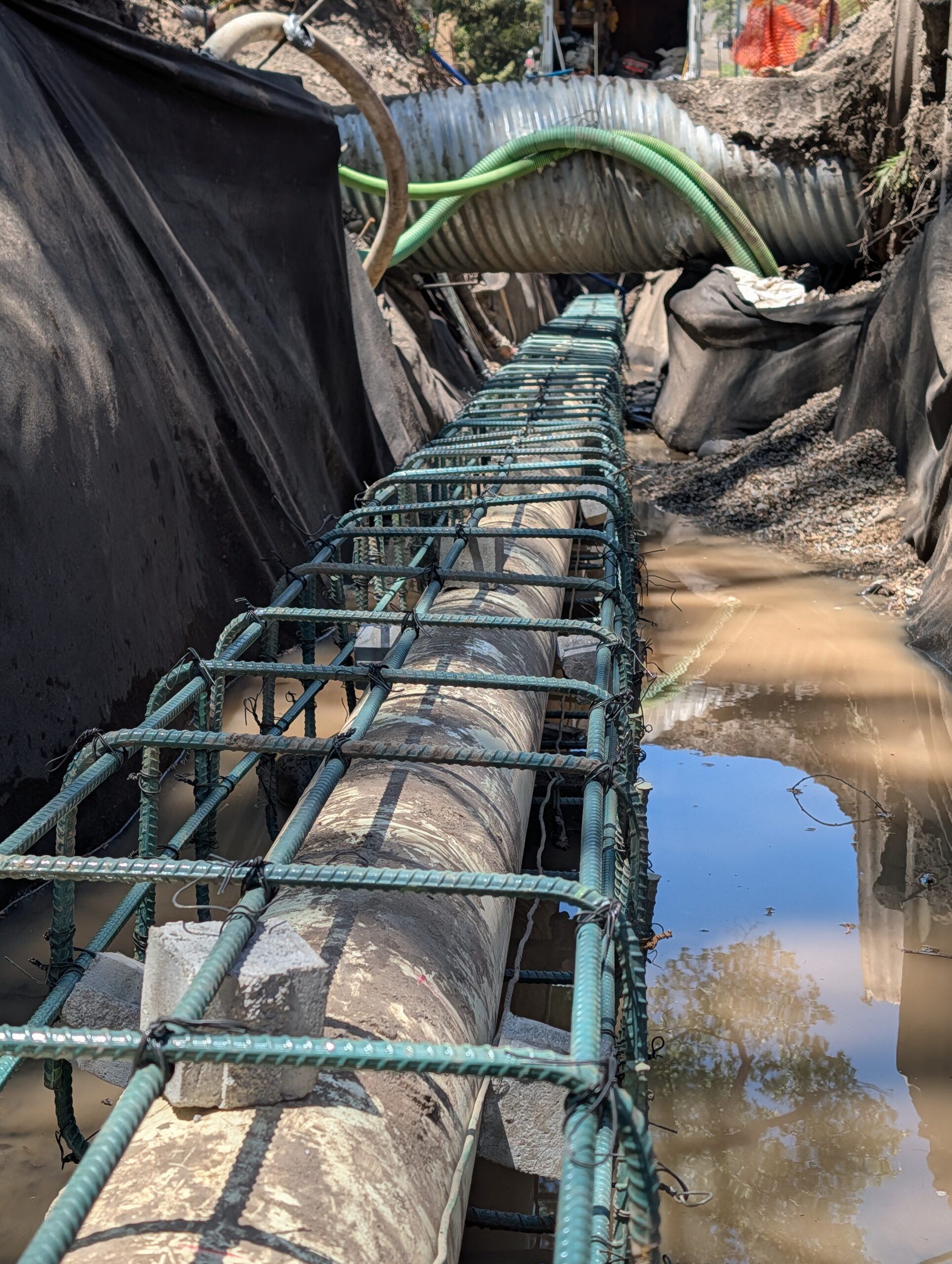
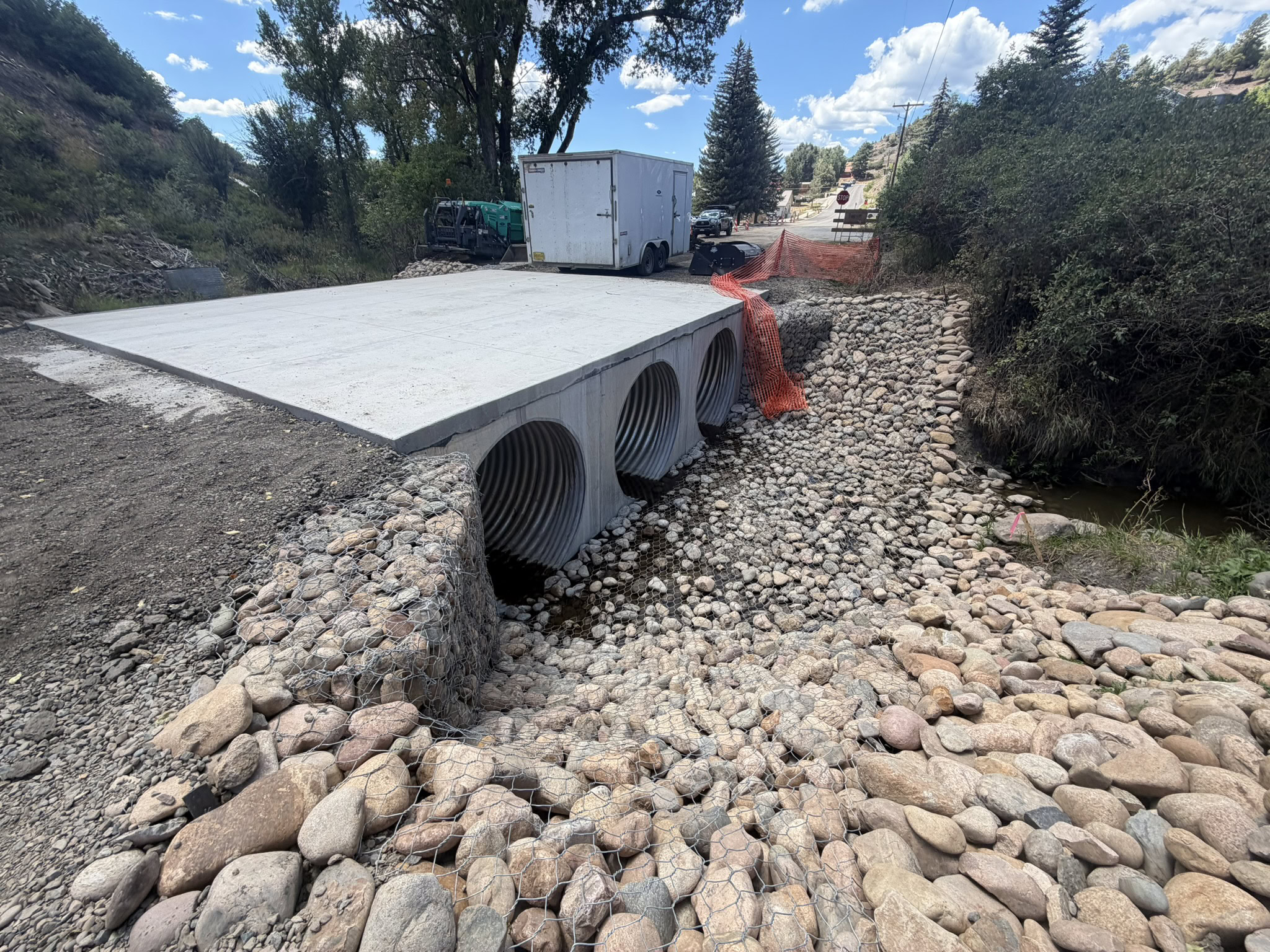
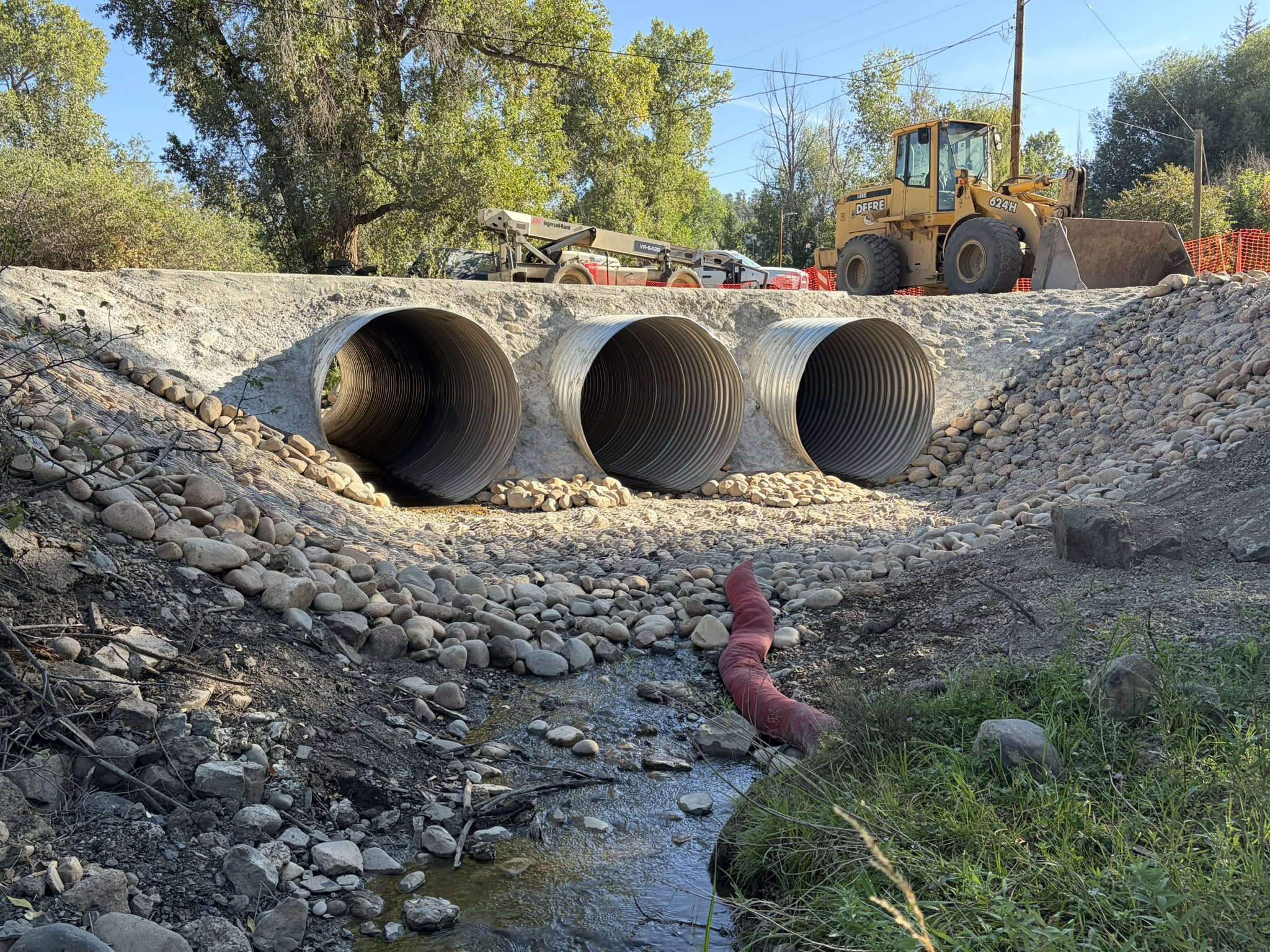
What began as a sewer pipe replacement became a full redesign of the culverts and channel at McCabe Creek. Roaring Fork Engineering provided hydrology, hydraulic design, and construction-phase engineering on a small, constrained site.
Challenges & highlights
The site was small, flood magnitudes through the culverts were high, and the surrounding land was private property, which limited how much could be disturbed. Our team balanced total site disturbance against the need for greater flood resilience. Unmarked gas utilities and a sewer line in a different location than expected required field changes during construction.
The existing FEMA floodplain mapping and hydrology for the area dated to roughly the 1970s. We performed new hydrology work using modern methods to determine more realistic flood magnitudes for the site.
The results
The culverts were installed successfully, and the town was pleased with the outcome. To balance disturbance with resilience, the crossing was designed as a low-flow crossing, which allows floodwaters to pass over the roadway during extreme events without eroding or damaging the road. This approach is uncommon, and it was feasible here because the road is a public road with relatively low traffic.
Location: Pagosa Springs, CO
Infrastructure that lasts
Whether you’re planning a new development, upgrading public infrastructure, or improving community systems, our team is ready to help bring your project from concept to completion.