
Mountain resorts in Colorado’s high country are defined by luxury amenities, remote locations, and dramatic terrain. Those same qualities also make water supply one of the most complex and risk-laden aspects of resort development.
Behind every guest experience, from drinking water and bathing to snowmaking and food service, is a carefully engineered system designed to perform under extreme elevation, seasonal demand swings, and strict regulatory oversight. Water supply decisions made early in a resort’s life cycle can determine not only feasibility, but long-term operational reliability and cost.
Why Water Supply Is a Critical Risk Factor for Mountain Resorts
Water systems at mountain resorts are not simply utilities. They are critical operational infrastructure.
Unlike urban developments, resorts often operate at the edge of available supply, in environmentally sensitive areas, with little redundancy if something fails. A misstep in water planning can lead to permitting delays, emergency system upgrades, service interruptions, or even forced operational limits during peak season.
Beyond this, resort communities and smaller resort-style systems face a larger hurdle when it comes to regulatory compliance. Resorts are still held to the same stringent standards as large municipalities, which means permitting and design costs are higher relative to the size of their system. The permitting efforts and design information required for a successful project can be a costly undertaking that must be planned properly from the start to avoid disrupting both the schedule and your budget.
This is why water resource engineering must be approached as a risk-management exercise — balancing reliability, regulatory compliance, and long-term operability, not just initial capacity.
Water Rights and Permitting Constraints in Colorado’s Mountain Communities
In Colorado, water rights are governed by the principle of “first in time, first in right.” Understanding how those rights apply to a specific site is foundational to any resort project.
Before site plans are finalized or infrastructure layouts are locked in, developers must evaluate whether water rights can be acquired, augmented, or legally connected to an existing supply. Failing to do so early can result in costly redesigns or stalled approvals.
Permitting adds another layer of complexity. Mountain municipalities often require detailed water management plans reviewed by an Engineer of Record, with scrutiny on downstream impacts, seasonal demand, and environmental protection.
Real Life Example: Water Rights in Action
For example, at a private resort in Delta County, water rights and the diversion point of water played a critical role in developing the water system for the resort. Because the system had senior priority rights for surface water diversions, the project moved forward with developing a complex surface water treatment system and a large distribution system. While the project was a large investment, the water delivered to the community residents became a focal point of the project and is now a highlight of the resort itself.
Early engineering involvement allows these constraints to be identified — and addressed — before they become project-limiting issues.
Designing for Seasonal Demand and Operational Flexibility
Resort water demand is rarely consistent. Peak occupancy during ski season or summer tourism can place enormous strain on systems that sit underutilized for months at a time.
Engineering decisions must account for:
- Maximum demand scenarios
- Off-season efficiency
- Staffing and maintenance realities
- Long-term operating costs
One approach is designing redundant, modular systems, smaller treatment or supply units that can be activated or shut down as demand fluctuates. Another is centralized treatment, which reduces operational complexity but often requires oversized facilities to meet peak demands.
Resorts often want to minimize the footprint and cost of the water system due to site constraints, budget, and limited building space. When resorts underestimate water demand for systems, it leads to undersized storage and pumping facilities. This limits water use at the resort, which can lead to two outcomes: either not fully utilizing your water right, which may lead to losing some of your water right in the future, or asking the system to run close to 24 hours a day, which decreases system resiliency and responsiveness to great demands.
There is no universal solution. The right approach depends on the resort’s operating model, growth plans, and tolerance for operational complexity.
Treating Mountain Water Safely and Reliably
Mountain water sources often present unique treatment challenges. Many Colorado resort areas are located near historic mining activity, where heavy metals and mineral loading can contaminate groundwater. Natural geology and steep surface water sources can also introduce constituents that require advanced filtration.
At the same time, treatment facilities are often constrained by footprint, terrain, and access. Some mountain treatment plants are compact yet designed to serve thousands of guests and staff during peak periods.
Real Life Example: How Water Quality Influences Treatment Design
For a project located in Summit County, the water rights point of diversion was located several hundred feet from a gravel processing facility. The impact from the facility included high total dissolved solids, metals, and salts in the groundwater. That meant the treatment system required an advanced level of treatment to remove all water quality parameters of concern to create safe drinking water. This required nanofiltration units, chemical addition, and additional granulated activated carbon to assist with taste and odor.
Often in contaminated waters, constituents are removed at such high rates that it results in a water that lacks taste and ideal aesthetics. When this occurs, a blend of treated water is designed to maintain proper pH, dissolved solids, and mineral content while providing a better, slightly alkaline taste.
Effective treatment system design is driven by worst-case conditions, regulatory requirements, and long-term reliability, not average-day assumptions.
Distributing Water in Steep, High-Elevation Terrain
Elevation changes fundamentally alter how water must be distributed across a resort.
When water sources sit above the resort, gravity can be leveraged — sometimes even generating power through small hydro systems. However, uncontrolled gravity flow can create excessive pressure, requiring pressure-reducing stations to protect infrastructure.
When resorts sit mid-mountain or at higher elevations, water must be pumped uphill. This introduces challenges related to:
- Energy demand
- Freeze protection
- Pipeline thickness and depth
- Maintenance access
Changes in slope also increase the risk of air pockets forming in pipelines, which can disrupt flow and damage systems if not properly vented.
Mountain communities and resorts face several compounding unique factors when designing distribution systems related to the steep grades and extreme temperatures, and nd distribution line venting is an example of this.
Because of the steep slopes, the amount of air that must be released is often much larger than in a similar system in a flat location. Air-vacuum release valves need to be designed for elevation changes, including detailed hydraulic models that can estimate air volume release appropriately.
Additionally, the installation of air release valves and pipelines along elevation changes often requires serious consideration of freezing prevention. The valves serve an important purpose: to release pressure via air. However, this creates a natural pathway for freezing within the distribution system. That introduces the necessity of frost protection in the vaults.
These two parameters are both essential but work against each other. Our work is carefully calibrated to ensure a delicate balance between ensuring proper venting and adequate frost protection at all pathways created from venting installations.
Designing for constructability and long-term maintenance is just as important as meeting hydraulic requirements.
Why Early Water Resource Engineering Determines Long-Term Resort Success
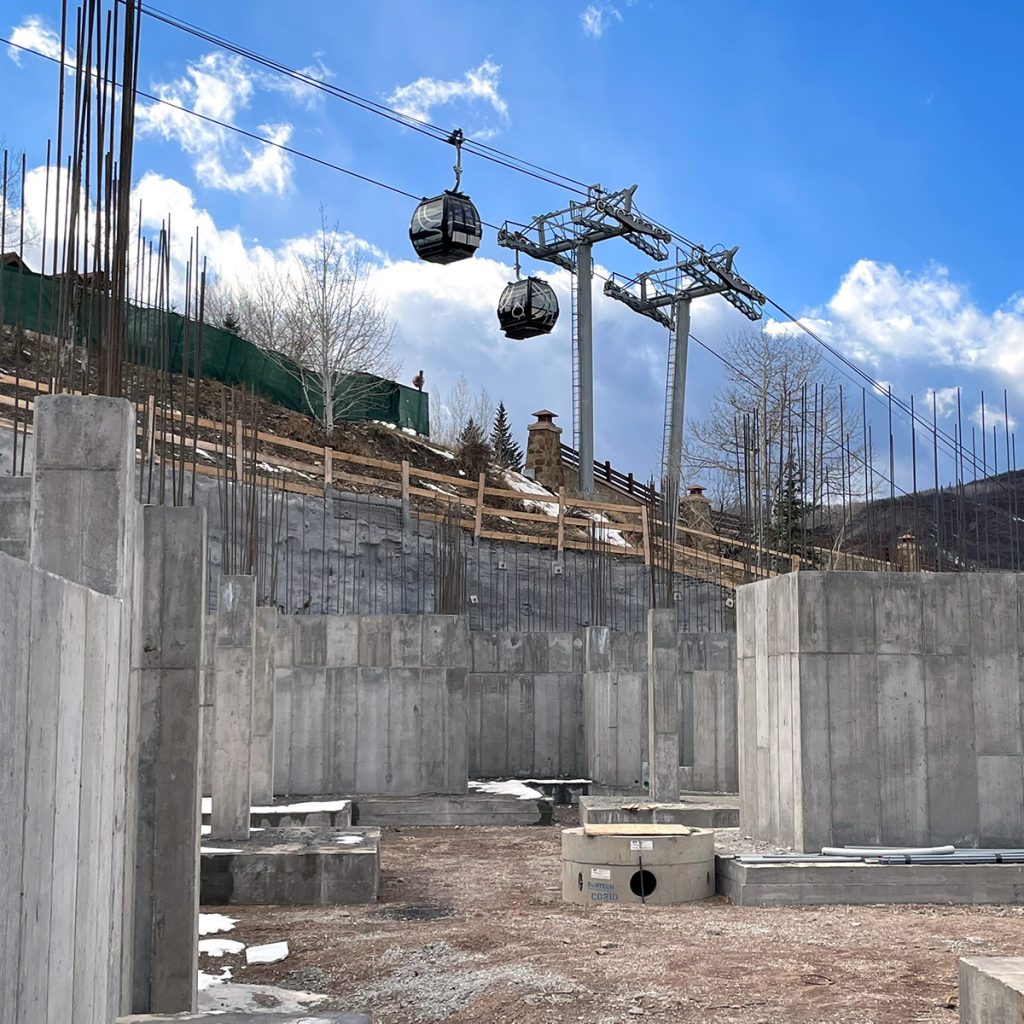
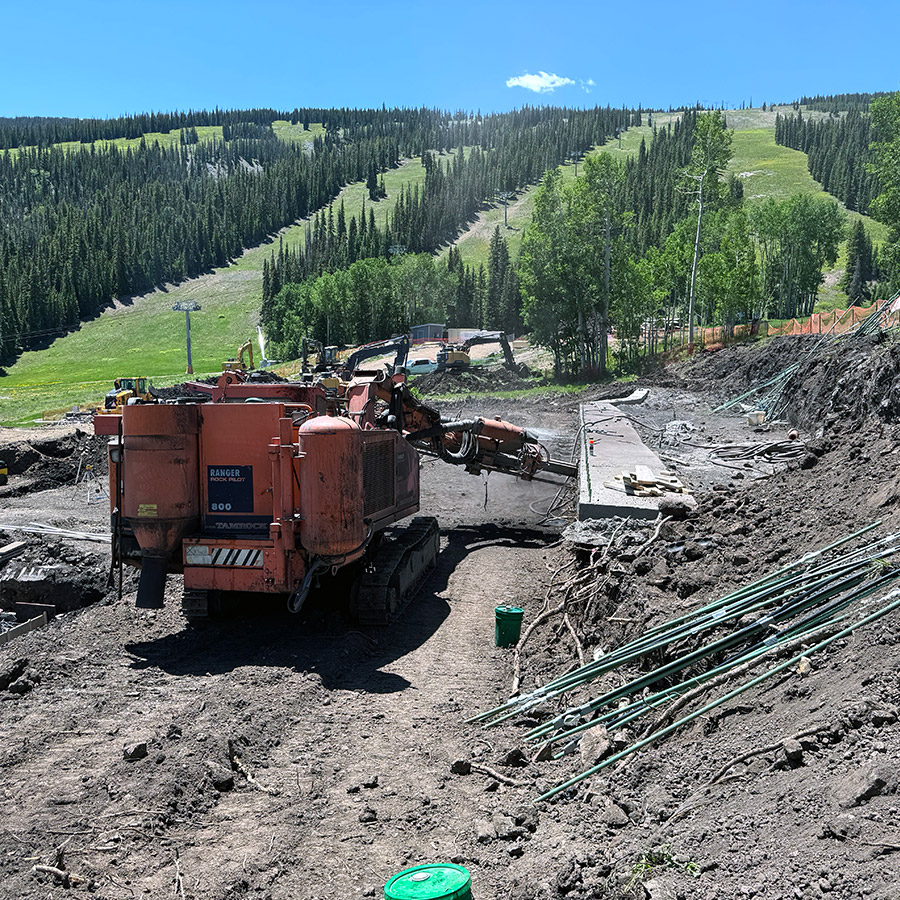
The most successful resort projects bring water resource engineers in early — often before site layouts or architectural plans are finalized.
Early involvement allows engineers to:
- Confirm water rights feasibility
- Identify permitting risks
- Align infrastructure with long-term operations
- Avoid costly late-stage redesigns
- Coordinate effectively with architects, planners, and operators
Early involvement for a design engineer like Roaring Fork Engineering is ideal because the systems we work in often are interdependent and complex. Our early involvement allows us to help guide the decisions that impact critical systems such as drainage, drinking water, wastewater, and site layout. Choosing where to place the structures, like garages, basements, or above-ground buildings, will all impact design decisions later in the process.
In mountain environments, the cost of fixing water system decisions late is almost always higher than the cost of thoughtful planning upfront.
How Water Resource Engineering Supports Resort Projects in Colorado
Roaring Fork Engineering has worked alongside resort developers, municipalities, and utilities throughout Colorado’s mountain west for decades. Our work is grounded in regional knowledge, regulatory fluency, and an operator-informed approach to system design.
We understand how water rights, terrain, and long-term operations intersect — and why those intersections matter long after a resort opens its doors.
If you are planning a mountain resort or evaluating water supply feasibility, early collaboration can make the difference between a system that merely functions and one that performs reliably for decades.
To learn more about working with Roaring Fork Engineering, get in touch.