
Have you ever wondered how massive bridges, towering skyscrapers, or winding highways are built so precisely? A lot of it comes down to the work of land surveyors. These professionals are the unsung heroes behind the scenes, providing the essential measurements and data that civil engineers rely on to design and construct our infrastructure.
Without accurate land surveys, many civil projects would lack the solid foundations needed for safety and success. In this article, we’ll dive into the vital role that land surveyors play in civil engineering and why their expertise is key to making sure every project is a success.
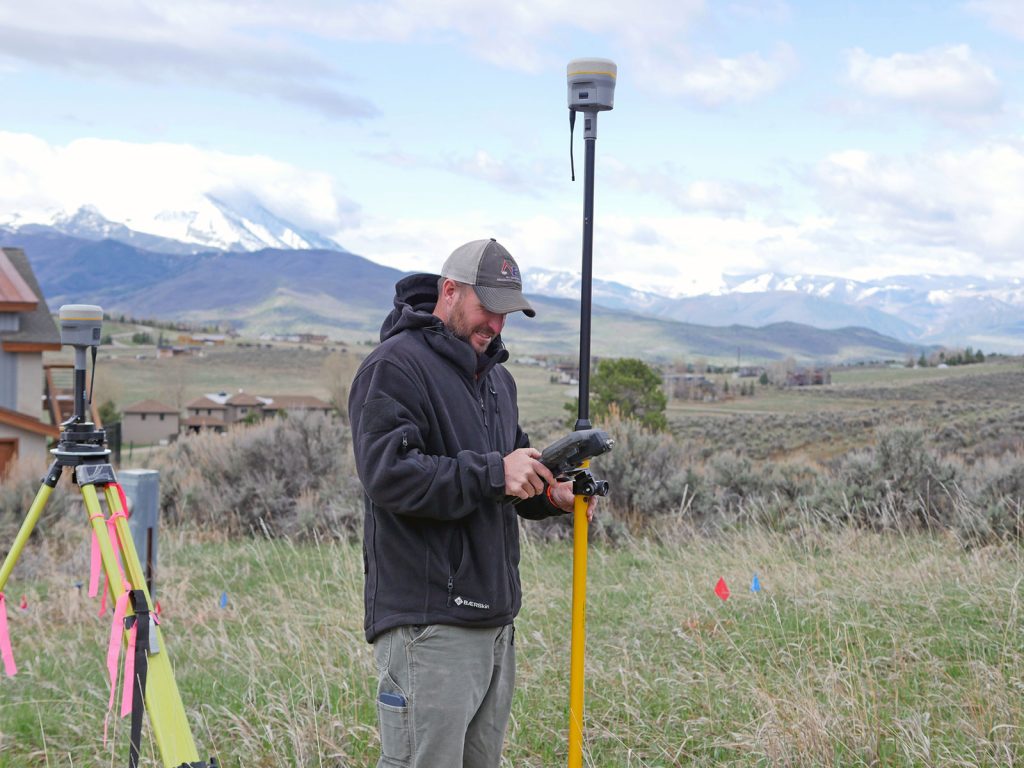
How Land Surveys Support Civil Engineering
Land surveys are fundamental to the civil engineering process, offering detailed information about the terrain, elevation, and features of a site. This data is critical for the planning and design phases of projects such as roads, bridges, and buildings.
By mapping out the land’s contours and identifying potential obstacles, surveyors help engineers create accurate blueprints that guide construction, ensuring that structures are safe, stable, and compliant with regulations.
Some civil engineering firms, like ours, offer land surveying services alongside their engineering services to condense your points of contact into one, which has advantages, such as:
Improved Safety
Civil surveying enhances safety by identifying potential hazards and ensuring that construction sites are suitable for building. Accurate surveys prevent errors that could lead to structural failures, reducing the risk of accidents and injuries.
Improved Efficiency
By providing precise data, land surveys streamline the design and construction processes. All the information is available upfront, avoiding delays while the construction team or design team looks for measurements or historical data. Engineers can avoid costly mistakes and delays by working with accurate information from the start, leading to more efficient project execution.
Improved Accuracy
Land surveyors use advanced technology to capture highly accurate measurements, which are critical for the success of civil engineering projects. This accuracy ensures that projects are built to exact specifications, avoiding costly rework and ensuring long-term stability.
When Civil Engineering Projects Need Land Surveys
Land surveys are required at various stages of civil engineering projects. There are many types of land surveys that can be conducted, but the most common are boundary, topographic, construction and as-built. They are often performed at four key points during a major project:
- Before construction begins, surveyors often conduct boundary surveys to establish property lines and identify any legal issues related to land ownership.
- During the design phase, topographic surveys can provide detailed information about the land’s surface, which is essential for creating accurate plans. Other surveys like floodplain surveys may also be conducted to look for potential environmental concerns.
- Throughout the building process, construction surveys are performed to ensure that structures are being erected according to the design specifications.
- After project completion, as-built surveys are conducted to verify that the project has been completed as planned.
Surveys are far more than measurement, however. Surveying helps align engineering efforts to ensure project success. The topographical and boundary information from surveys impacts the design, the planning, and ultimately, how the final built structure performs.
Why Timing Matters for Surveying During Civil Engineering Projects
At each phase, surveying needs are different:
Conceptual and Feasibility Surveys
Before a design ever starts, a project needs to be proven viable. That means understanding what is actually on the ground: existing grades, approximate utility locations, access constraints, drainage patterns, and property lines. A well-scoped feasibility survey helps owners and engineers determine whether a project can move forward before committing to significant design fees.
Skipping this step is a common and costly mistake. Projects that advance into design without adequate early survey data often encounter field conditions that invalidate assumptions, which may trigger redesigns after substantial fees have already been spent. The smarter approach is to scope survey work to cover all anticipated downstream needs from the start. If a client needs an Improvement Survey Plat or Improvement Location Certificate, collecting topography at the same time is almost always more efficient and less expensive than returning to the site later.
Design-Grade Topographic Surveys
Design-grade topographic surveys capture precise elevation data, existing infrastructure, drainage features, and site geometry at the resolution engineers need to size structures, route utilities, establish grades, and manage stormwater.
A design-grade survey constraints critical control points, for example, sewer manhole elevations and pipe invert elevations at tie-in points. If those elevations are off, the entire downstream sanitary sewer design can fail. Engineering-informed surveyors collect data with design intent in mind, which makes all the difference as construction progresses.
Construction Staking
Once designs are complete and construction starts, surveying translates engineered drawings into physical stakes and reference points that contractors use to build. At this stage, accuracy and responsiveness are key to moving projects forward accurately. Contractors are managing multiple moving parts simultaneously. Staking helps crews reconcile the plans with the site.
As-Builts Tied to Record Drawings
As-built surveys document what was actually constructed versus what was designed. They matter for regulatory submittals, operations and maintenance, future project coordination, and long-term liability protection. When as-built data is collected carefully and tied clearly to record drawings, owners have a reliable picture of their infrastructure that can serve them for decades.
Why Survey Timing Matters
Survey work done too late forces engineers to design around incomplete information, make conservative assumptions, or proceed on conditions they cannot fully verify. When field conditions differ from what was assumed, the result is redesign, contract amendments, RFIs, and construction delays — none of which were in the original budget.
Why Engineering-Informed Surveys Reduce Risk and Rework
Not all survey work is the same. The technical licensing requirements for a surveyor are well-defined, but the skill of surveying with design intent in mind develops through experience.
At RFE, we train our surveyors to think ahead. Before fieldwork begins, they consider how the data will be used: What grades are being established? Where do utilities tie in? What drainage features need to be captured to support hydraulic calculations? Where are the tight spots that will drive design decisions?
A surveyor who has spent years working alongside engineers on municipal infrastructure, site development, and water systems develops an intuitive sense for what data matters and where gaps will cause problems. This results in a survey designed with the project intent in mind, and creates alignment from the very beginning. In addition, engineering-informed surveys lead to better results for the following reasons:
Anticipating Grading, Utilities, and Drainage
Grading, utility design, and stormwater management are all elevation-sensitive. In relatively flat terrain, a fraction of a foot of error can mean the difference between a functional drainage system and one that floods. In mountain terrain, steep grades create different but equally serious consequences when vertical data is inaccurate.
Engineering-informed surveys anticipate these needs. They capture sufficient breakline data for accurate surface modeling, flag existing utility conflicts before design begins, and document drainage features at the resolution hydraulic analysis requires. Surveyors who understand these downstream uses collect better data the first time, which reduces supplemental field trips, design iterations, and costly field clarifications.
Aligning Survey Data with Permitting and Review Standards
Many projects pass through regulatory review, such as CDPHE, FEMA, local planning departments, or public works agencies. Each has its own expectations for how survey information is formatted, referenced, and submitted. Surveys that are not aligned with those standards create friction at review: reviewers request additional data, engineers return to the field, submissions are resubmitted, and timelines extend.
Visualizations That Make Sense in the Field
Surveys aren’t just about gathering data, they also require that data to be laid out in a way that makes sense to the team that needs to review it.
Kyle Tesky, Survey Manager here at RFE, explained his approach to visualizations.
“As a surveyor the most important part of a survey is the property boundary. I use a much bolder line to define the boundary. This helps the boundary stand out against all of the other information represented on the map. The use of different colors is becoming a popular method to highlight certain parts of the map. I use color mostly to show existing underground utilities. I also utilize different font types and sizes to highlight specific parts of the map. All things combined make the map more visually appealing to the reader.”
Common Problems Caused by Incomplete or Low-Quality Survey Data
The risks of poor survey data are not abstract. They can cause scheduling delays, increased costs, and construction conflicts that threaten results. Here’s what happens when survey data isn’t up to par:
Redesigns During Permitting
When survey data does not fully capture existing conditions, engineers make assumptions. Those assumptions hold until they meet a reviewer, a contractor, or actual field conditions — and when they fail, the design has to be revised. Redesigns during permitting are particularly painful because they occur after significant engineering fees have already been spent, and they reset the review clock.
Construction Conflicts
On active construction sites, survey errors translate directly into contractor problems. Grades that don’t match. Utilities in different locations than shown. Structures that can’t be built as designed because the field conditions were different from the model. Every one of those conflicts generates an RFI, a potential change order, and a conversation about who is responsible. In most cases, the root cause is survey data that wasn’t complete or accurate enough to begin with.
Delays Waiting on Clarification
Even when survey errors are not dramatic, gaps in coverage slow everything down. Engineers request supplemental shots. Surveyors return to the field. Contractors wait on updated staking. Each of these steps adds days or weeks to a schedule, and on projects with compressed timelines or fixed deadlines, that time is rarely available.
Increased Liability for Engineers and Owners
When infrastructure fails or construction disputes arise, the quality of the original survey data is often scrutinized. Project owners bear the financial consequences of delays, change orders, and potential litigation. High-quality survey data does not eliminate risk, but it provides defensible documentation and reduces the likelihood that field conditions will diverge from what was designed.
Low-Cost Survey = Future Budget Increases
The cost of a supplemental survey, a redesign, or a construction conflict almost always exceeds the savings from selecting the lowest survey proposal. The better question is not “how little can we spend on surveying?” but “what does this project actually need, and who is best positioned to deliver it?”
Surveying in Mountain and High-Constraint Environments
.The terrain, climate, and regulatory context that define projects across the Roaring Fork Valley and Colorado’s western slope create conditions that are genuinely more demanding than flat-land surveys, and they require surveyors with direct experience working in them. This is what we consider in our high-elevation projects:
Steep Terrain and Elevation Accuracy
In mountainous regions, the most challenging aspect of survey work is often physical access. Steep slopes, dense vegetation, rocky outcroppings, and remote project areas can make it difficult or impossible to reach certain parts of a site using conventional equipment and methods. Surveyors working in these environments must be comfortable adapting to the site conditions, by selecting control points that are actually reachable, using equipment suited for the terrain, or planning fieldwork with realistic constraints in mind.
Steep grades are actually more forgiving for gravity-fed utility systems than flat terrain, where even minor elevation errors can cause drainage systems to flow the wrong direction. But errors in vertical data on mountain sites create their own failures, like undersized culverts, grading conflicts, and infrastructure sited in areas that cannot be built as designed. Elevation accuracy isn’t less important, it just requires a different perspective than on flat land.
Drainage Sensitivity
Mountain watersheds respond quickly and with force. Streams and drainage channels in steep terrain carry high velocities and significant sediment loads, and infrastructure in or near those systems must be sized and positioned carefully. Survey data that accurately captures drainage features like channel geometry, floodplain extents, and existing conveyance structures are foundational to hydraulic analysis and floodplain compliance.
In the Roaring Fork Valley, FEMA-mapped floodplains intersect with active development corridors. This means the precision of floodplain survey data directly affects what can be permitted and built. Survey errors can bring projects to a halt at the permitting step.
Snowpack and Seasonal Constraints
Survey access in mountain communities is seasonal in ways that flat-land projects simply are not. Deep snowpack can make portions of a site inaccessible for months. Frozen ground conditions affect utility investigation. Vegetation that is dormant in winter may obscure drainage features that need to be captured in warmer months.
Experienced mountain surveyors build seasonal realities into project planning from the start. They know which portions of a site need to be surveyed before snowfall, which access roads close in spring mud season, and how to sequence fieldwork around the constraints that define the region.
Why Precision is Essential for Mountain Infrastructure
Public infrastructure in mountain towns is often built in tight corridors with little room for error. In these environments, the margin between a design that works and one that requires a costly field revision is small, and survey precision is what protects it.
As RFE’s team has observed in practice, engineering projects that span long stretches of existing roadway, like a sewer main replacement or a road reconstruction, require analysis of boundary evidence across the entire corridor, not just the individual parcels along it. Determining accurate right-of-way location across a mile of mountain road requires a different approach than a single-parcel residential survey, and it requires surveyors who understand the difference.
How Surveyors, Engineers, and Contractors Coordinate in Practice
Good outcomes on civil engineering projects come from teams that communicate clearly, share information early, and solve problems together. The relationship between surveyors, engineers, and contractors is one of the most consequential coordination efforts — here’s what leads to success:
Construction Staking Responsiveness
From a contractor’s perspective, staking responsiveness is one of the most visible and impactful qualities a surveyor can have. Because crews are scheduled in advance, equipment is staged and subcontractors are coordinated, if staking is not ready when it is needed, the whole sequence falls apart.
The most effective construction staking teams treat their schedules as flexible by design. They stay in close contact with the project superintendent, understand the construction sequence, and can mobilize quickly when a contractor’s needs shift. Accuracy is non-negotiable, but the ability to deliver that accuracy on a contractor’s timeline is what makes for a successful project.
CAD File Alignment
Survey data delivered in a format that does not align with an engineer’s CAD standards isn’t useful for anyone. Layer naming conventions, coordinate systems, units, and file organization all affect how quickly an engineer can work with a survey file. When surveyors and engineers share a common technical environment, engineers can start work without spending hours reformatting a deliverable.
The Relationship Between Surveys and Scheduling
Survey data sits at the beginning of nearly every downstream project activity. Design cannot start without it, permitting submittals depend on it, and onstruction cannot proceed without staking. When surveys are delayed, no matter the reason, everything else is delayed too.
Get in Touch with Expert Civil Surveyors in the Roaring Fork Valley
For those in the Roaring Fork Valley, our expert civil surveyors at Roaring Fork Engineering are available to assist with a wide range of projects. Our professionals have extensive experience in the Colorado area and are well-versed in the specific challenges and requirements of the region. Whether you need a boundary survey, topographic survey, or construction survey, our team is equipped to provide the accurate data and insights necessary for successful project completion. Get in touch with us today to discuss your next project.
Land Surveying FAQs
When should surveying be completed during a civil engineering project?
Surveying should happen earlier than most clients expect. For projects moving into design, topographic survey data needs to be in hand before engineering begins.. For clients who also need an Improvement Survey Plat or Improvement Location Certificate, it is almost always more efficient to collect topography at the same time rather than returning to the site later. On projects moving into construction, staking needs to stay ahead of the contractor’s schedule, which requires coordination and lead time. Treating survey as something that can be arranged at the last minute consistently leads to delays and added cost.
What’s the difference between a survey for design and a survey for construction?
A design survey captures the existing conditions of a site, such as elevations, drainage features, utility locations, boundaries, and built improvements, at the precision and coverage that engineers need to model the site and develop a design. A construction survey translates that completed design back into the field by setting stakes, marks, and reference points that tell contractors exactly where and at what elevation to build. Both require accuracy, but they serve different purposes and occur at different project phases. A project typically needs both, and the quality of the design survey directly affects how straightforward the construction survey will be.
Why does engineering-informed surveying matter?
An engineer and a surveyor working in isolation will eventually produce a design and a survey that don’t fully align because neither had complete visibility into what the other needed. Engineering-informed surveying closes that gap. Surveyors who understand how engineers use data know which control points are critical, which areas need higher shot density, and how to format deliverables so they are immediately useful for design. The result is fewer supplemental trips, fewer design revisions, and fewer field conflicts during construction.
How does terrain affect survey accuracy in mountain regions?
Mountain terrain creates access challenges that flat-land surveys do not face, including steep slopes, remote areas, dense vegetation, and seasonal constraints that limit when and how certain parts of a site can be reached. Experienced mountain surveyors plan around these realities from the start by sequencing fieldwork to account for snowpack, access road conditions, and vegetation. On the precision side, steep terrain can actually be more forgiving than flat terrain for gravity-fed systems, but vertical accuracy still matters significantly. Infrastructure designed on incorrect elevation data will not be buildable as designed, regardless of how dramatic the slope.
Can poor survey data delay permitting or construction?
Survey data that does not meet regulatory standards requires supplemental fieldwork before a submittal can be completed. Survey data that misrepresents existing conditions causes design revisions that push back permitting timelines. In construction, staking errors or missing control points stop contractor operations until corrections are made. These delays compound: a two-week survey issue early in a project can translate into a month of schedule loss by the time the ripple effects work through design, permitting, and construction sequencing.
Why do engineers prefer working with surveyors they trust?
Successful projects are built on both technical accuracy and demonstrated reliability. An engineer working with a trusted surveyor can scope a project efficiently, ask questions without formality, get honest feedback on feasibility, and count on the deliverable being ready when it is needed. That working relationship adds value by saving time at the scope stage, preventing miscommunication during fieldwork, and eliminating the back-and-forth that slows down projects when engineers and surveyors are working together for the first time. On repeat projects, that accumulated trust is one of the most practical efficiencies available to a project team.